Why a Tooth Darkens After Root Canal Treatment: Restoration Methods and Internal Bleaching
Noticed a non-vital tooth turning gray, yellow, or dark brown? Discover why teeth darken after nerve removal, how internal (endodontic) bleaching works, and which modern restoration techniques can restore your natural smile.
Discoloration of a tooth following root canal therapy is a common cosmetic concern, especially when it affects the front teeth. Unlike surface stains, this darkening originates from deep within the tooth structure, making conventional whitening toothpaste and hygiene procedures ineffective.
Why Teeth Darken After Root Canal Treatment
Color change in a devitalized tooth stems from specific internal chemical and structural factors:
Breakdown of blood components: during trauma or pulp removal, red blood cells can enter the dentinal tubules, where hemoglobin breakdown products cause dark staining.
Older endodontic sealers: legacy canal filling materials (such as resorcinol-formalin paste or silver posts) cause pinkish, grayish, or dark brown discoloration.
Incomplete tissue removal: remaining organic pulp debris inside the root canals decomposes over time, staining the surrounding dentin.
Loss of vitality: without active blood supply and nerves, the tooth loses moisture and natural translucency, appearing dull and opaque.
Internal (Endodontic) Bleaching: How It Works
When discoloration occurs from within, internal bleaching (also known as walking bleach or endo-bleaching) is the primary non-invasive solution:
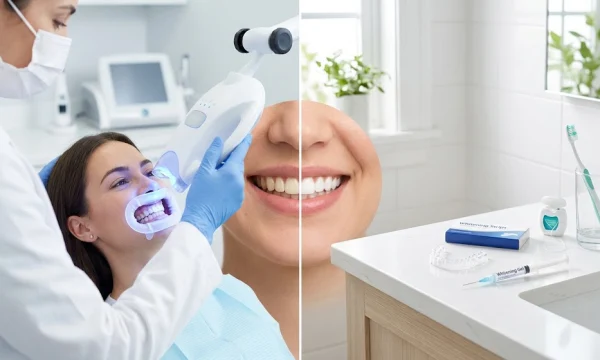
How it works: the dentist accesses the pulp chamber, seals off the root canal filling with a protective barrier, and places a dedicated bleaching agent inside the chamber.
Temporary seal: the tooth is sealed with a temporary restoration for 3–5 days while active oxygen breaks down trapped pigments.
Process repetition: depending on the degree of staining, 1 to 3 applications may be required to match neighboring teeth.
Final restoration: once desired lightness is achieved, the agent is removed, neutralizing treatment is applied, and a final aesthetic filling is placed.
Restoration Methods: Beyond Bleaching
If the tooth structure is severely compromised or bleaching yields incomplete results, structural restoration options are recommended:
Direct composite bonding: layering specialized opaque and translucent resins to mask underlying dark dentin directly in the dental chair.
Ceramic veneers: custom porcelain shells bonded to the front surface, offering ideal optics, translucency, and long-term stain resistance.
All-ceramic or zirconia crowns: recommended when over 50% of the tooth structure is lost, providing maximum strength and natural aesthetics.
Dentist's Advice for Restoring Your Smile
To safely achieve an optimal cosmetic outcome, consider these key professional recommendations:
Pre-treatment X-rays: verify proper root canal obturation and absence of apical inflammation before initiating internal bleaching.
Barrier protection: ensure a tight cervical barrier is placed to prevent bleaching agents from diffusing into the periodontal ligament.
Early intervention: addressing discoloration sooner increases the likelihood of a successful, single-course whitening result.
If your tooth has darkened after root canal treatment, consult a qualified dental specialist — modern endodontics and cosmetic dentistry offer reliable, safe solutions to renew your confidence!